Everyone talks about time management. Books, podcasts, productivity hacks, apps, and articles: there’s always advice on how to find more time.
Time management isn’t the problem. We all get the same 24 hours in a day. The difference between someone who manages their time and someone who doesn’t isn’t about magically finding more hours in their day; it’s about clarity, prioritization, discipline, and structure.
Effective time management creates clarity, shouldn’t overwhelm you, and cuts down on wasted time spent.
The most depreciating asset or resource we have in life is time. Spend it wisely.
The Real Issue with Time Management
I learned from a young age the difference between activity and progress: progress is activity toward something.
Our calendars are filled with meetings, emails, calls, and reactive tasks that leave us feeling depleted, exhausted, and constantly in a hamster wheel. Are you really making progress? Or are you busy being busy because you are in a perpetual state of playing catch-up?
Being busy ≠ being effective. Activity ≠ progress.
Time management requires discipline. I have found that the difference between who wants what and who actually gets it is discipline.
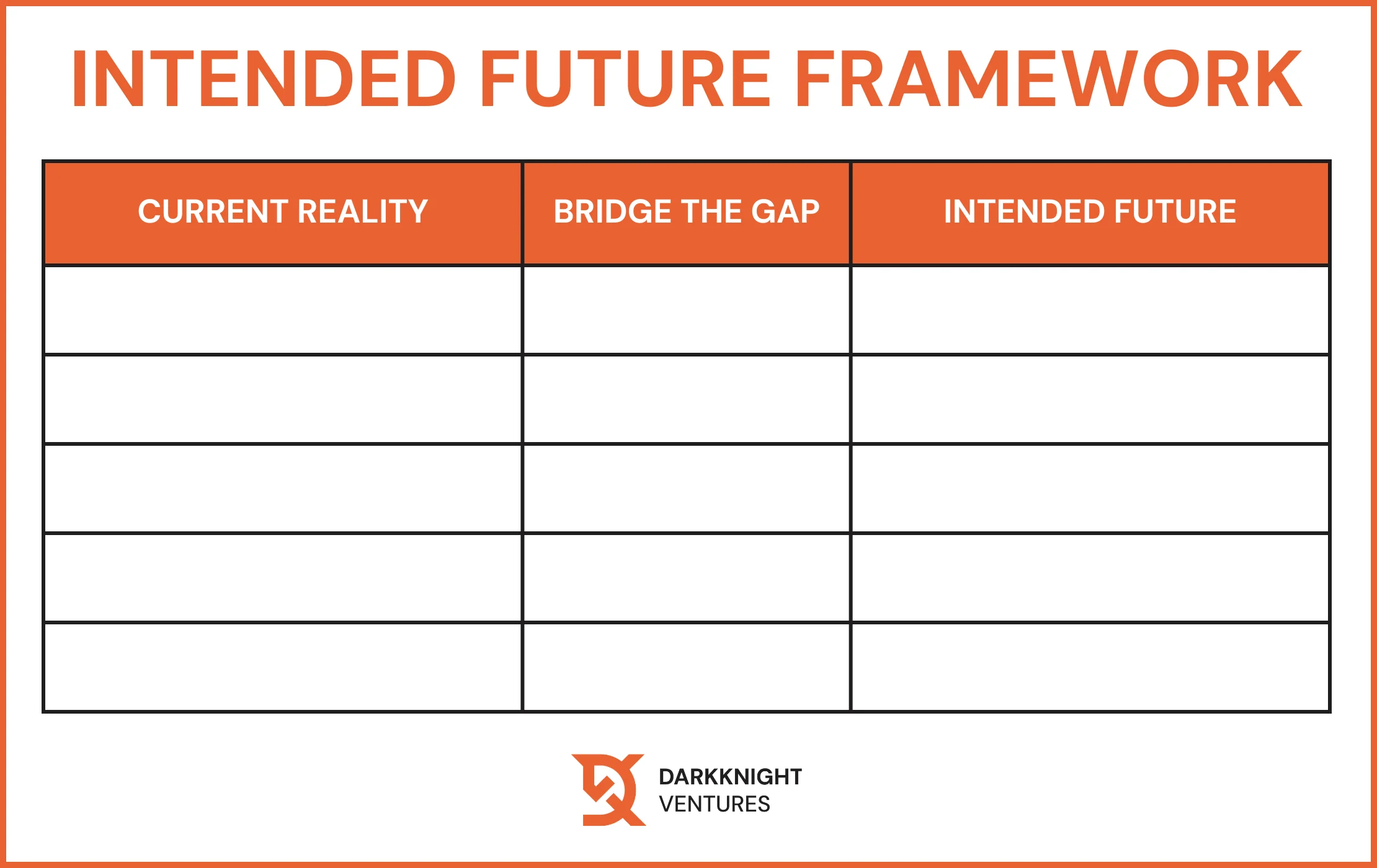
Time management is a habit. The difference between good habits and bad habits is that good habits align with the identity you seek for yourself and/or the stated Intended Future you seek. The Intended Future framework helps me identify what’s most important, so I can use my time management skills to prioritize actions that help me reach that future.

Time Management Tools
I was never blessed with raw talent, so I figured that I needed an edge. I needed to use my time more effectively than the smart kids in class, so I tried to succeed by outworking them.
You can’t “will” yourself to have better time management skills, but you can implement a series of tools, practices, and strategies to help you optimize your time in the short-term and long-term. And the good news? You CAN improve your time management skills and eventually accomplish more in less time.
The Eisenhower Matrix
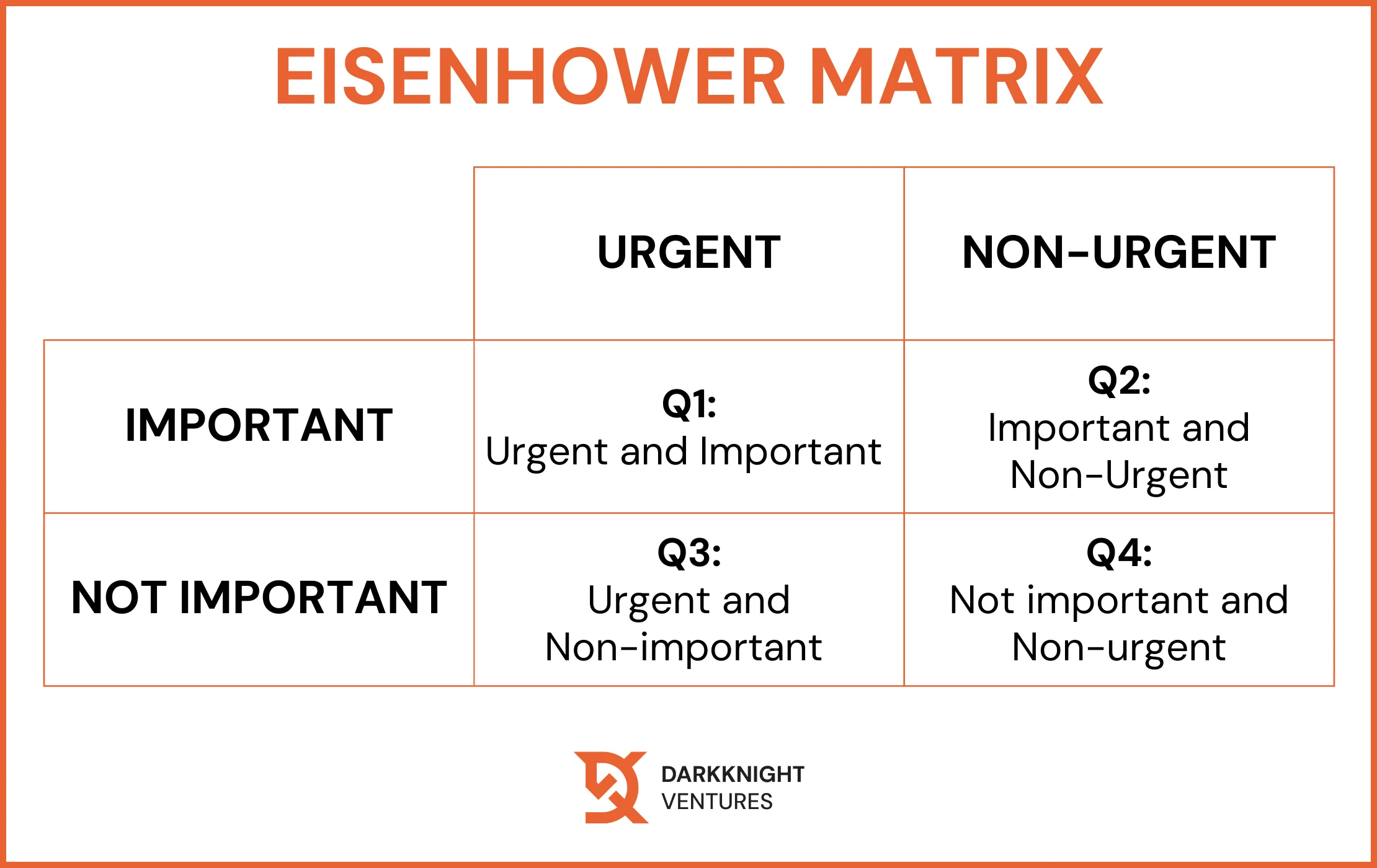
My tried-and-true framework is always the first one I recommend: the Eisenhower Framework. It focuses on figuring out what’s urgent vs. non-urgent and important vs. non-important. Every task or activity that you do fits into one of the four quadrants of this matrix:
- Q1 = Urgent and Important: Immediate action is required (but you find yourself on your heels, at the effect of others)
- Q2 = Important and Non-Urgent: Action-taking can be done thoughtfully (where you want to live your professional life)
- Q3 = Urgent and Non-Important: Delegation or elimination
- Q4 = Not Important and Non-Urgent: Distractions to minimize or simply ignore
I’m a big believer in “plan your work and work your plan”. This is why I always push annual planning; how else do you move ahead if you don’t even know where you’re going? Your weekly plan should be a derivative of your annual plan, right?
Most of us spent our time in quadrant 1, going through the endless hamster wheel cycle of just trying to stay caught up but not actually advancing (which eventually leads to burnout and total exhaustion).
- The sweet spot: Quadrant 2. This is where the real stuff gets done. But if you aren’t planning, aren’t disciplined and don’t schedule it, urgency will always win out.
Quadrant 3? Try not to get hung up here. Quadrant 4 is even less important. These two quadrants take over when procrastination gets in the way.
Red. Blue. Black.
This is a framework used to balance your work week. IF you have an Intended Future, 3-year milestones, and an annual plan for the company and your professional contribution, then how do you manage your week???
When you think about your entire life, personal and familial and professional, there are generally three types of activities:
- Red: These activities are the lifeblood; activities you must do, but don’t help the bottom line. Think: expense reports, admin and team meetings, grocery shopping, laundry, making travel arrangements, etc.
- Blue: These activities are what you do day to day per your specific role at work; think revenue-producing activities or supporting revenue-producing activities.
- Black: These activities are what you do today that will pay off in the future. This includes training, additional education, strategic planning, marketing, etc.
Every quarter, it’s important to figure out what percentage of your time will be spent on each color during your working hours. For example, if I decide on 10% red, 70% blue, and 20% black, and I plan to work 50 hours a week, it breaks down like this:
- Red: 5 hours
- Blue: 35 hours
- Black: 10 hours
I tend to organize myself in red/blue/black based on my biorhythms and “public vs private time”. These percentages will change based on priorities, the external environment, and long-term plans. During the Great Financial Crisis of 2007/2008, my focus was on survival. I pivoted to 90% blue, 10% red (it’s impossible to make red 0%), and 0% black – I couldn’t focus on long-term activities and plans when my number one goal was surviving the crisis.
Organize and Prioritize Your Schedule with Intent.
Your calendar reflects your priorities. If someone looked at your week, would they see intentional design or complete chaos? Here are a few things I’ve learned over the years that I consider when planning my schedule:
Biorhythms
Are you a morning person, night owl, or something in between? When do you get your best work done? Knowing your biorhythms when you schedule out your week’s work plan helps you focus on the “hard” tasks when you’re most productive and leave admin tasks when you need something more mindless. I know I’m the sharpest in the morning, so I save my most important tasks that require thought and strategy for the very first thing. Conversely, I get into a lull after lunch, so I’ll handle more admin or mindless tasks in the afternoon.
DO versus DUE
Know when a task is due and focus on when you will do it. Don’t start a big task the night before it is due, then realize you have a bunch of questions for others that won’t be answered in time. A lack of planning on your part does not constitute an emergency on someone else’s time!
Scheduling Flexibility
I’m a big believer in purposely leaving flexibility and space in your calendar. But, if you do, you need to be disciplined and focused. If nothing new needs your focus, then stick to your plan and use that space for project work. Or, take a meeting! We’re usually quick to turn down a spontaneous meeting when we’re “busy.” But everyone is busy. And the reality is, we all have priorities and can/do make time to address them. If you factor in how much time you’re spending procrastinating, scrolling on social media, and idle chatter, you’d free up a lot of time in your schedule. So the next time you have a spontaneous appointment or meeting come up on your calendar, take it! You never know when it might lead to new ideas or more possibilities.
If you’re overly protective of your calendar and your project list, you’re not maximizing the opportunity to build skills, accumulate experiences, and develop relationships.
The Importance of Rest
A calendar packed from 7 am to 7 pm ultimately leads to burnout. We’re not over-stressed; we’re underrecovered. We’re not leaving time in calendars to rest and do things that bring us joy (for me, that’s 9 hours of uninterrupted time watching all the NFL games on a Sunday).
You cannot operate at peak performance 100% of the time. And if you try, the wheels are eventually going to come off. Ultimately, giving yourself time to recover will lead to fresh perspectives, better decision-making skills, emotional regulation, and long-term sustainability.
And while we’re on the topic of rest and recovery, turn off all your damn notifications, dings, and alarms – not just during the work day but even more importantly, when you’re off the clock. These are time sucks that interrupt your focus (or rest) and distract you.
Sherlock Holmes said, “The best rest is a change of problem.” Don’t forget to schedule in exercise.
Time Management Takeaways
Time management isn’t about squeezing more into your day; it’s about aligning what matters to you and who you want to become, and making your calendar reflect that. After 45+ years in business, the goal isn’t to manage your time. It’s to manage your energy, priorities, and clarity.


Latest posts by Jack Cohen (see all)
- The Loneliest Part of Leadership - September 25, 2026
- Risk Management Framework - June 15, 2026
- How to Manage and Prioritize Your Time - February 28, 2026